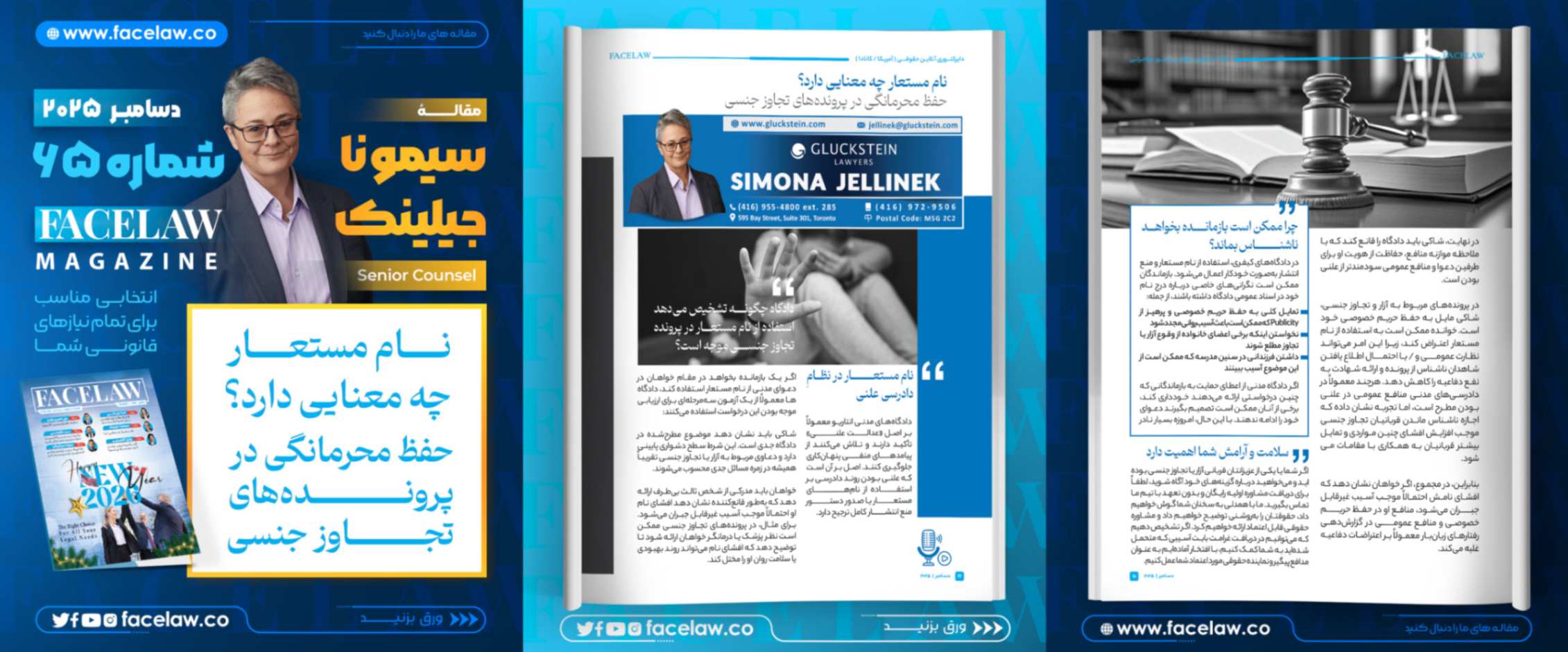
نام مستعار چه معنایی دارد؟ حفظ محرمانگی در پروندههای تجاوز جنسی
دادگاههای مدنی انتاریو معمولاً بر اصل «عدالت علنی» تأکید دارند و تلاش میکنند از پیامدهای منفی پنهانکاری جلوگیری
Blog
Farsi Blog
Simona Jellinek

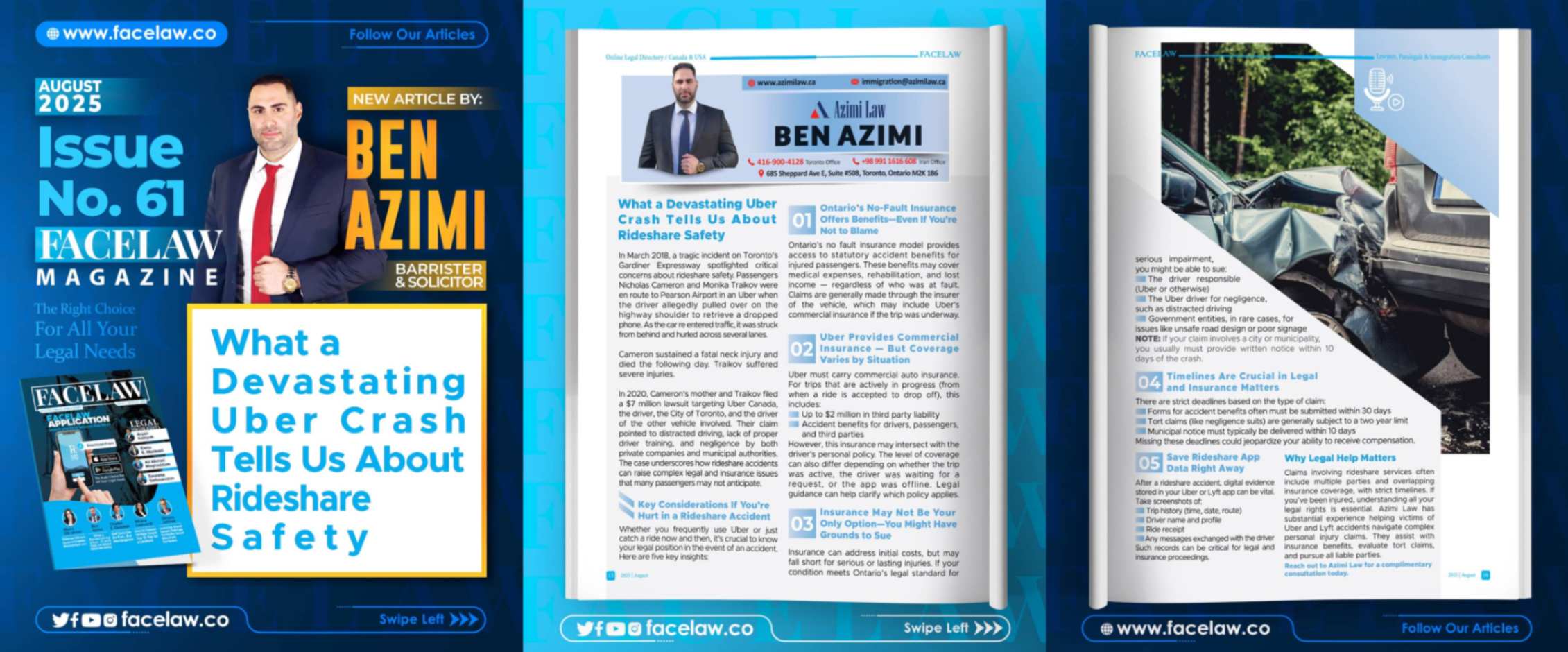
What a Devastating Uber Crash Tells Us About Rideshare Safety
In March 2018, a tragic incident on Toronto’s Gardiner Expressway spotlighted critical concerns about rideshare safety. Passengers Nicholas Cameron and Monika Traikov were en route to Pearson Airport in an Uber when the driver allegedly pulled over on the highway shoulder to retrieve a dropped phone. As the car re-entered traffic, it was struck from behind and hurled across several lanes.
Cameron sustained a fatal neck injury and died the following day. Traikov suffered severe injuries.
In 2020, Cameron’s mother and Traikov filed a $7 million lawsuit targeting Uber Canada, the driver, the City of Toronto, and the driver of the other vehicle involved. Their claim pointed to distracted driving, lack of proper driver training, and negligence by both private companies and municipal authorities. The case underscores how rideshare accidents can raise complex legal and insurance issues that many passengers may not anticipate.
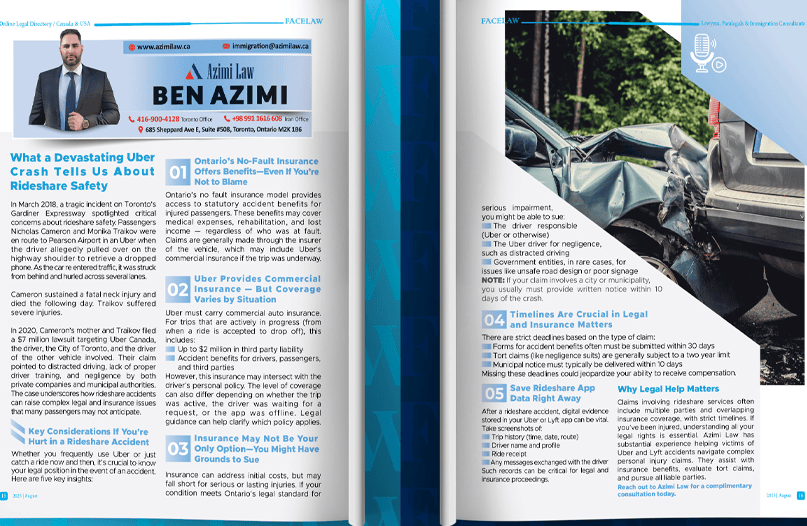
Key Considerations If You’re Hurt in a Rideshare Accident
Whether you frequently use Uber or just catch a ride now and then, it’s crucial to know your legal position in the event of an accident. Here are five key insights:
1. Ontario’s No-Fault Insurance Offers Benefits—Even If You’re Not to Blame
Ontario’s no-fault insurance model provides access to statutory accident benefits for injured passengers. These benefits may cover medical expenses, rehabilitation, and lost income—regardless of who was at fault. Claims are generally made through the insurer of the vehicle, which may include Uber’s commercial insurance if the trip was underway.
2. Uber Provides Commercial Insurance—But Coverage Varies by Situation
Uber must carry commercial auto insurance. For trips that are actively in progress (from when a ride is accepted to drop-off), this includes:
However, this insurance may intersect with the driver’s personal policy. The level of coverage can also differ depending on whether the trip was active, the driver was waiting for a request, or the app was offline. Legal guidance can help clarify which policy applies.
3. Insurance May Not Be Your Only Option—You Might Have Grounds to Sue
Insurance can address initial costs, but may fall short for serious or lasting injuries. If your condition meets Ontario’s legal standard for serious impairment, you might be able to sue:
Note: If your claim involves a city or municipality, you usually must provide written notice within 10 days of the crash.
4. Timelines Are Crucial in Legal and Insurance Matters
There are strict deadlines based on the type of claim:
Missing these deadlines could jeopardize your ability to receive compensation.
5. Save Rideshare App Data Right Away
After a rideshare accident, digital evidence stored in your Uber or Lyft app can be vital. Take screenshots of:
Such records can be critical for legal and insurance proceedings.
Why Legal Help Matters
Claims involving rideshare services often include multiple parties and overlapping insurance coverage, with strict timelines. If you’ve been injured, understanding all your legal rights is essential.
Azimi Law has substantial experience helping victims of Uber and Lyft accidents navigate complex personal injury claims. They assist with insurance benefits, evaluate tort claims, and pursue all liable parties.
Reach out to Azimi Law for a complimentary consultation today.
دادگاههای مدنی انتاریو معمولاً بر اصل «عدالت علنی» تأکید دارند و تلاش میکنند از پیامدهای منفی پنهانکاری جلوگیری
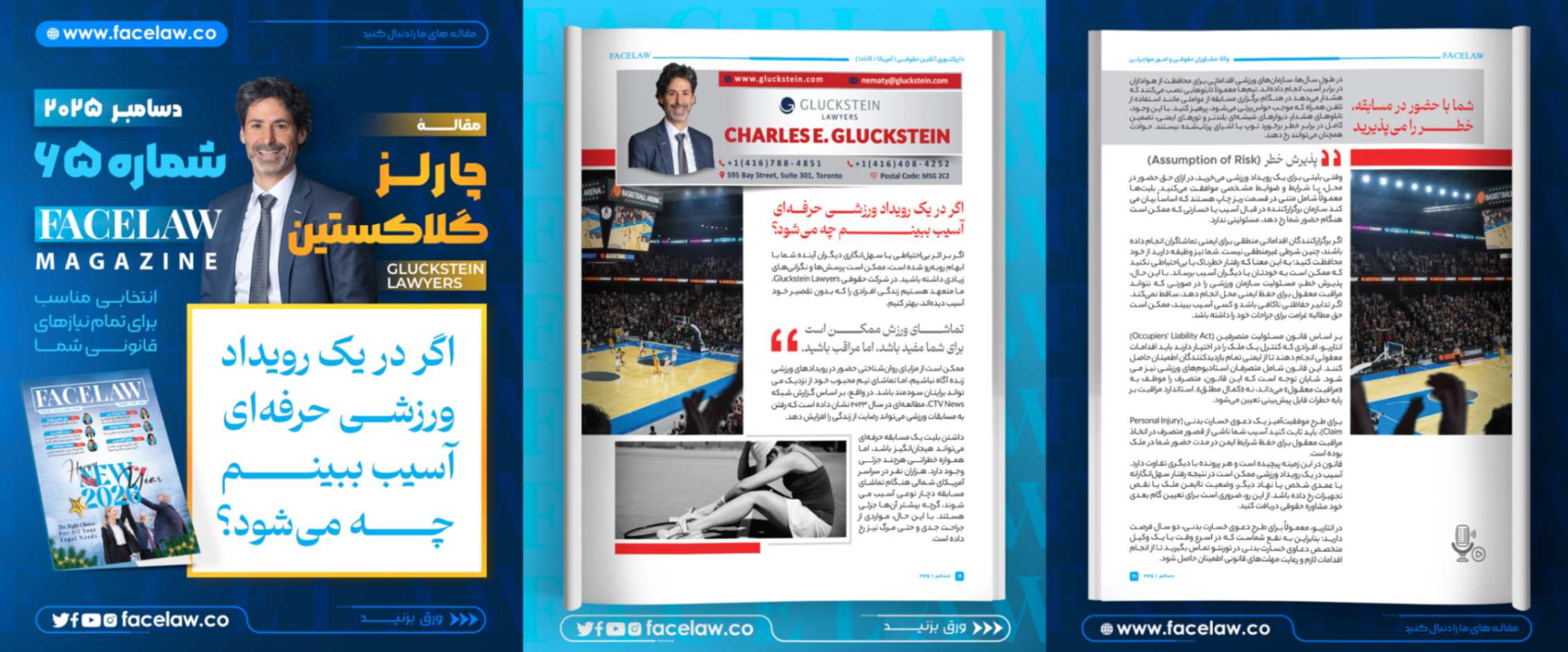
اگر بر اثر بیاحتیاطی یا سهلانگاری دیگران آینده شما با ابهام روبهرو شده است، ممکن است پرسشها و نگرانیهای
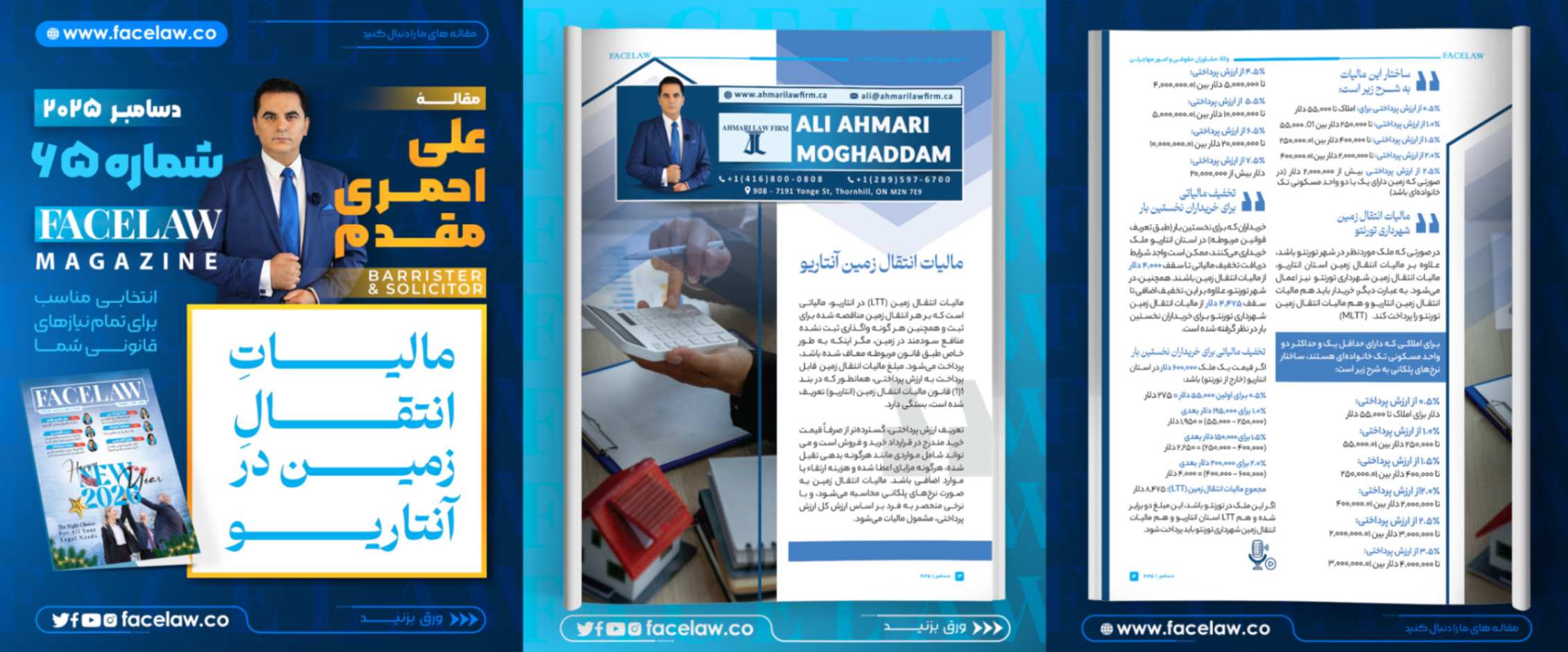
مالیات انتقال زمین (LTT) در انتاریو، مالیاتی است که بر هر انتقال زمین مناقصه شده برای ثبت و همچنین
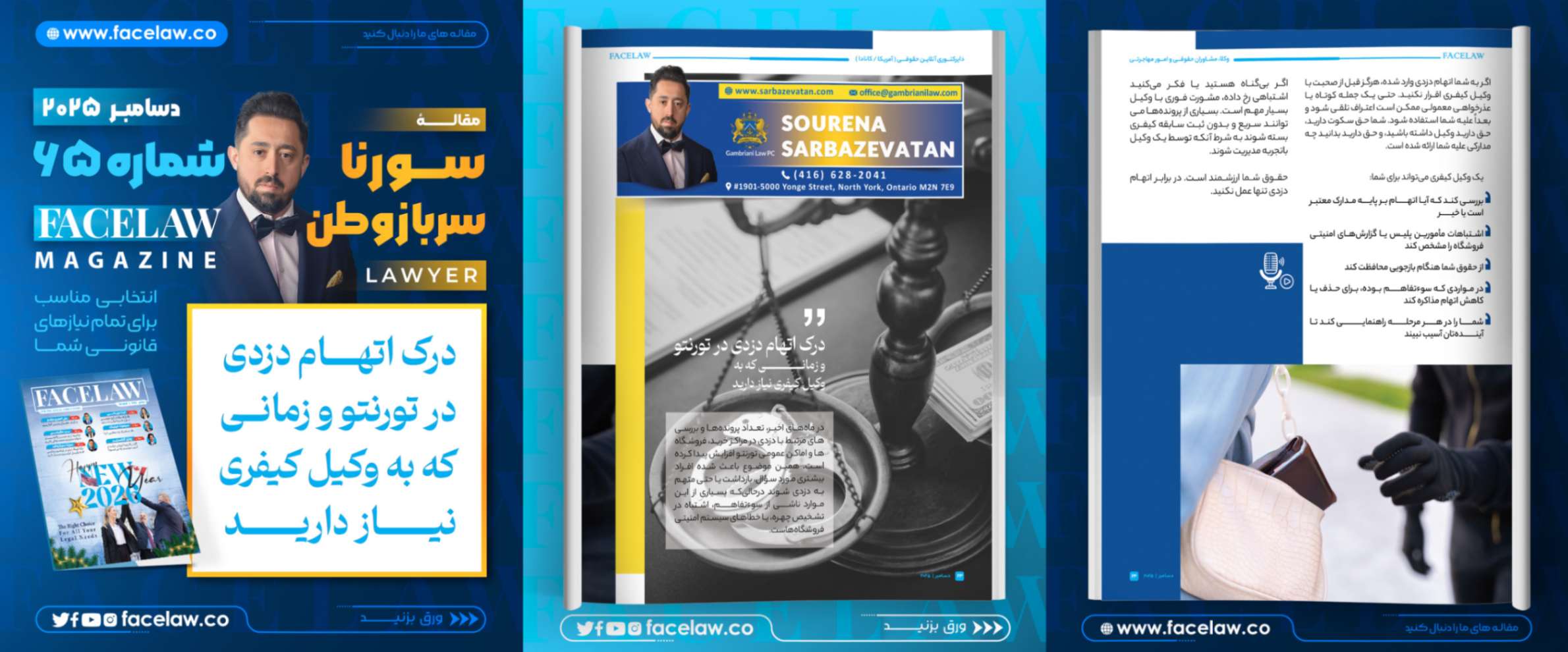
در ماههای اخیر، تعداد پروندهها و بررسیهای مرتبط با دزدی در مراکز خرید، فروشگاهها و اماکن عمومی تورنتو
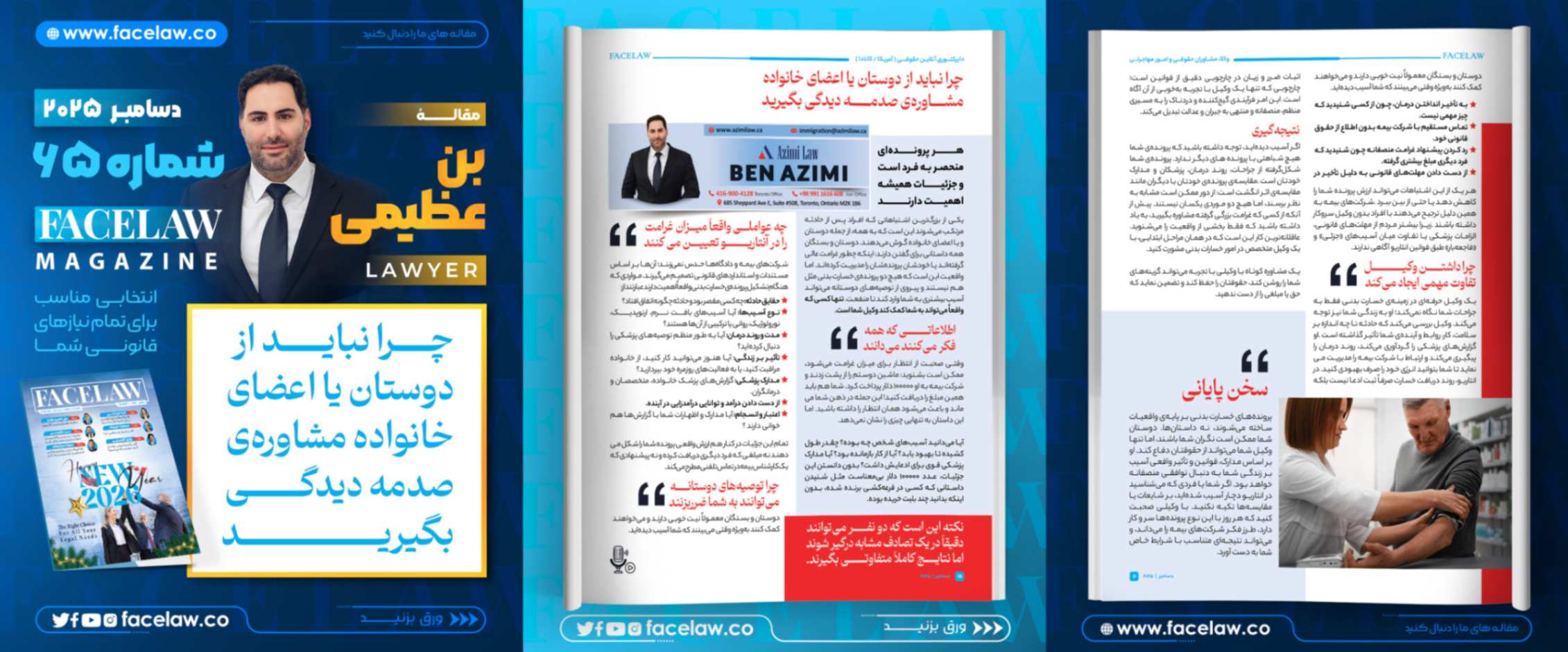
یکی از بزرگترین اشتباهاتی که افراد پس از حادثه مرتکب میشوند این است که به همه، از جمله دوستان
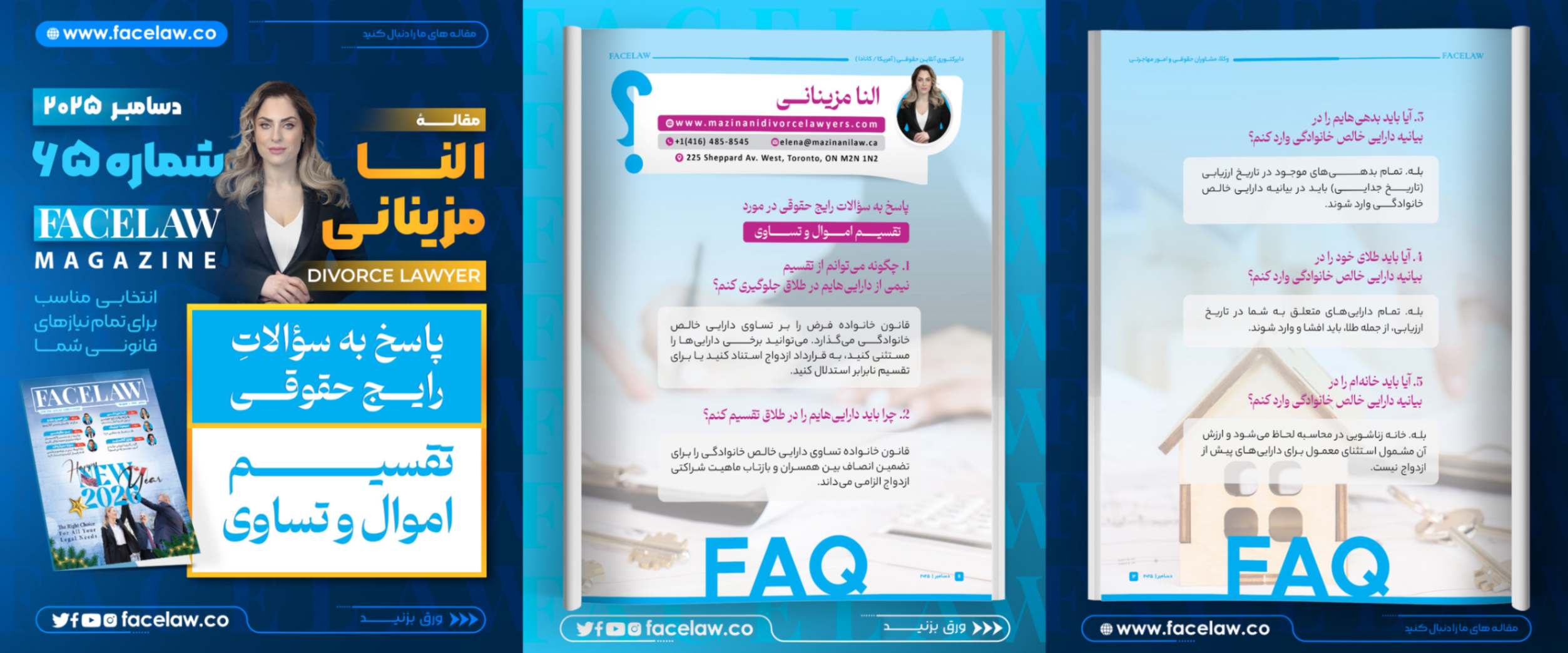
قانون خانواده فرض را بر تساوی دارایی خالص خانوادگی میگذارد. میتوانید برخی داراییها را مستثنی کنید